Andratx
It is priced above the municipal asking figure. Sant Elm held a Blue Flag beach in 2026 and Marina Port Andratx a Blue Flag marina. No train reaches it.
TramuntanaBlue Flag marina
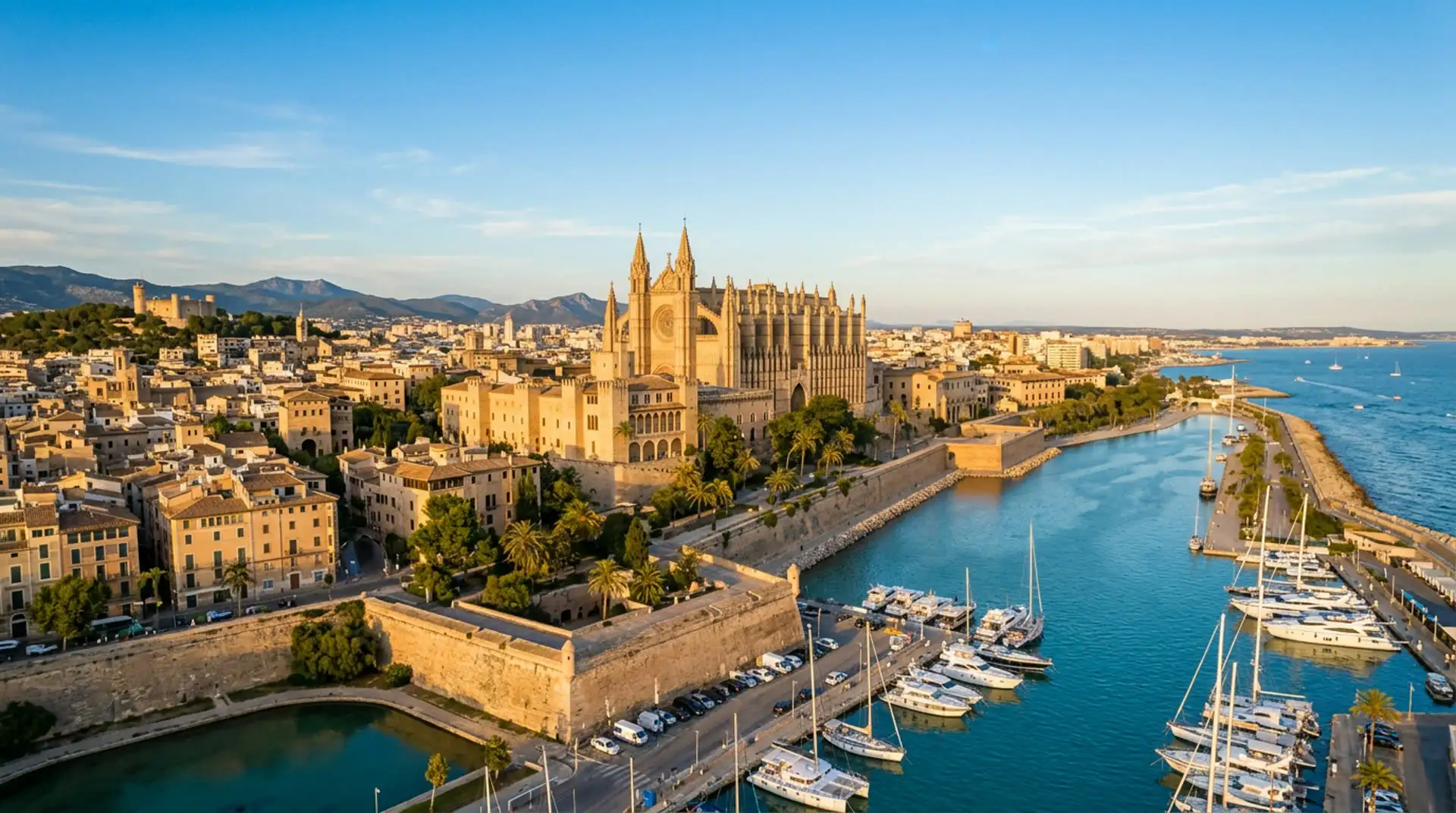
Mallorca is not one coastal lifestyle repeated around an island. Palma is a full-sized city with markets, old streets and a broad bay. The Serra de Tramuntana holds stone villages and steep western slopes. The central plain is agricultural, while the north and east open into bays, resort towns, fishing ports and smaller inland settlements.
Geography sets the rhythm. Mountain roads shape the west, the plain makes the interior feel open, and the coast alternates between long beaches, sheltered coves and rocky headlands. Palma concentrates the airport, major services and the island's rail network, while life farther away becomes more local and often more dependent on a car. The island can support city living, village life, a working rural base or a home close to the sea, but rarely all four from the same address.
That range is Mallorca's advantage and its genuine trade-off. Buyers gain year-round services, varied landscapes and towns that remain distinct from one another. They also meet high housing costs, summer pressure on roads and coastal places, and longer everyday journeys when they choose privacy or scenery away from Palma. The right decision begins with the municipality and daily route, not with Mallorca as a single idea.
The verdict
The upside is real. So is the downside. Both matter more than any brochure will admit.
Several ways of living on one island
Palma, mountain valleys, inland farming towns, ports and beach settlements offer distinct routines rather than one repeated resort model.
A substantial year-round centre
Palma concentrates major services, employment, hospitals and transport, giving the island an urban base beyond seasonal coastal activity.
Landscape remains close to daily life
The Tramuntana, the central plain and varied coasts make walking, cycling, sailing and rural settings part of the island's ordinary geography.
A superyacht refit economy in Palma
The island capital is home to a major European superyacht refit and repair yard, adding skilled marine work to Mallorca's economy.
Island housing carries a premium
Demand for limited land and coastal access makes many parts of Mallorca expensive, especially where scenery and convenient services coincide.
Summer changes roads and coastal towns
Busy months bring more traffic, fuller beaches and greater pressure on popular places, which can alter the routine around a second home or permanent address.
Privacy often means longer journeys
Homes away from Palma and the larger towns can offer space and quiet, but shops, schools, healthcare and regular transport may be farther away.
The rail network covers only part of the island
Rail and metro services are centred on Palma and selected inland routes. Many coastal and mountain locations remain dependent on buses or a car.
Editor's note
Buyers who want a quieter island with a smaller service base may be better off in Menorca. Ibiza suits those who accept stronger seasonality for a more concentrated social and coastal scene, while Formentera is the more specialised choice for a very small island and limited everyday range. Buyers who want Mediterranean sun without ferry dependence, island housing costs and the same degree of summer pressure should compare mainland Alicante. Mallorca remains the stronger fit when varied landscapes and a substantial year-round island economy outweigh those costs.
Palma municipality, station: Palma de Mallorca Aeropuerto (B278), 8 km east
Average 1981-2010 · AEMET
Mallorca, all 53 municipalities, INE Annual Population Census, nationality basis, 1 January 2025
Where to live and what to expect at each price point.
It is priced above the municipal asking figure. Sant Elm held a Blue Flag beach in 2026 and Marina Port Andratx a Blue Flag marina. No train reaches it.
Magaluf, Santa Ponça, Peguera and Illetes all sit here, and 3.331 bed places across the whole municipality were reported open year-round in 2024. Its average paid purchase price that year was 862.953 EUR, second highest among Spanish municipalities with more than 20.000 inhabitants.
The Palma and Cala Major hotel association, ASHAPAMA, said in December 2024 that 64 of its 80 member hotels stay open all year, and the rest close for only one month.
One of the twenty municipalities inside the Serra de Tramuntana Paratge Natural, and one of those the railway does not reach. Formentor, Cala Barques and Cala Molins all held Blue Flag beaches here in 2026.
The end of the T3 line out of Palma, with a comarcal hospital of its own. It stopped municipal lawn irrigation on 26 August 2026, and the Manacor-Felanitx demand unit stood in alerta as at July 2026, a level worse than anywhere on Ibiza.
A station on the Palma to Manacor line between Sineu and Manacor. It is one of the towns the public railway actually reaches, where Calvià, Alcúdia, Llucmajor and the airport have no public train.
Honest answers to the questions buyers actually ask.
Transfer tax rates as of August 2026. Rates are set per autonomous community and do change. Confirm the current figures with a Spanish lawyer or tax adviser before you budget.
The pros and the cons of every town, with sourced data on prices, climate and costs.
Your property search, saved cities, mortgage calculator and a step-by-step buying guide, from your first search to getting the keys.
Local agents who speak your language, and owners selling their own home, contact you about homes that fit your search.
Agents and owners ask to connect first. Your contact details are only shared with the people you accept.
Our comprehensive guide covers everything foreign buyers need to know - from NIE numbers and residency permits to mortgages and legal requirements.
Use our free mortgage calculator to estimate monthly payments, compare loan scenarios and understand the true cost of buying in Spain.